


















Bank Strategy in Action Simulation
Our Bank Strategy in Action simulation is an engaging, interactive learning solution that puts participants in the decision-making seat of a bank. Tailored to your needs, the simulation explores how strategy, capital allocation, funding and infrastructure decisions influence business performance and Return on Equity (ROE). Available in-person, virtually or in a hybrid format, the simulation can be aligned to your bank’s divisions, KPIs, values and culture.
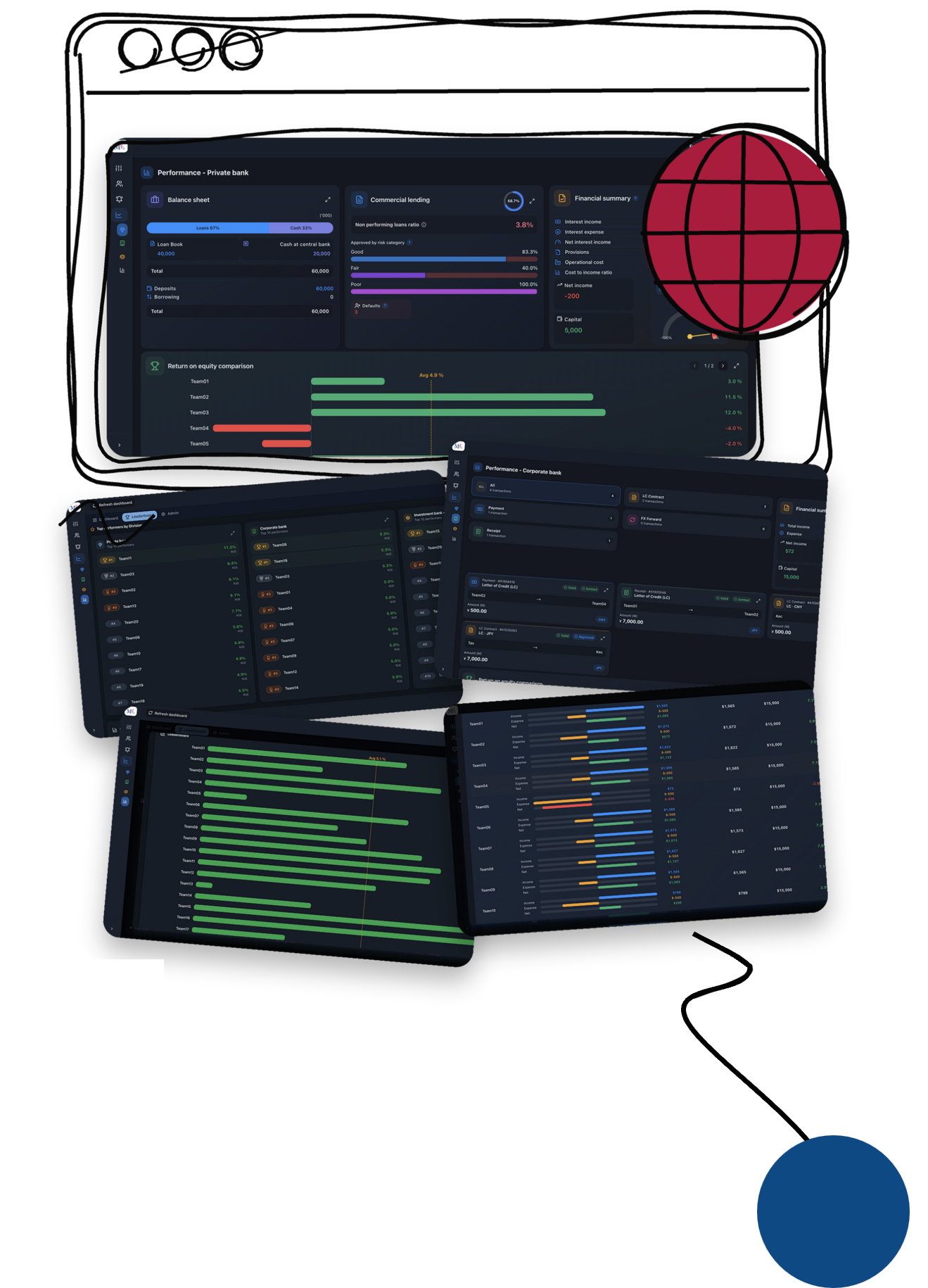
Bringing bank strategy to life
Working in teams, participants take on the role of a bank’s management team, setting its strategy, allocating capital and making decisions across business divisions. The simulation demonstrates how interconnected decisions, competing priorities and collaboration between business and infrastructure functions, influence client outcomes, risk exposure and the bank’s overall commercial performance.
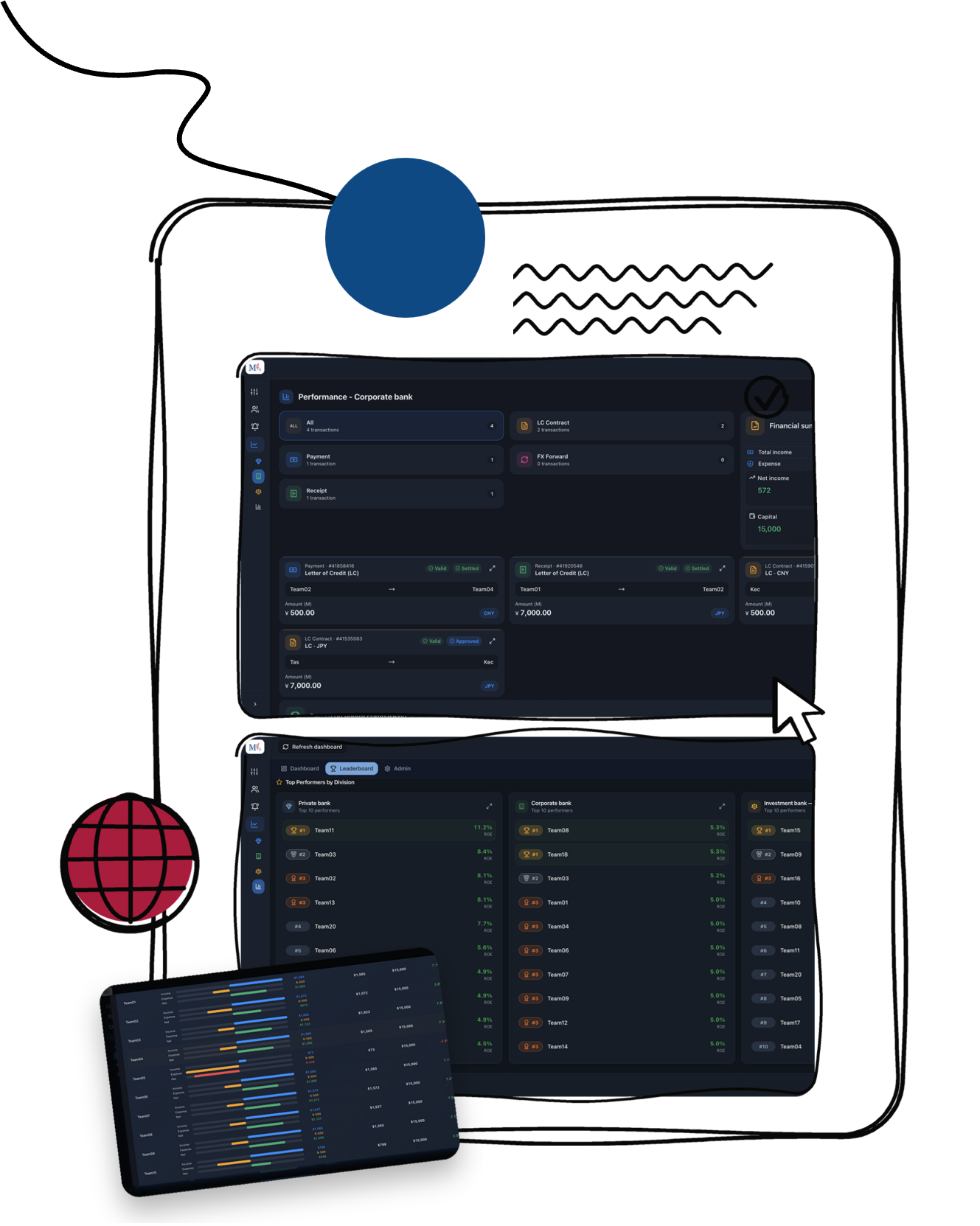
A flexible, immersive solution that can complement and elevate an existing workshop
The simulation can be tailored to different audiences, learning objectives and organisational priorities, seamlessly integrating into existing development programmes. Its flexible design allows participants to bring concepts to life through practical application, reinforcing key learning messages and connecting theory to real-world business decisions. This experiential approach enhances engagement, deepens understanding and amplifies the impact of existing learning solutions.

Delivering targeted learning outcomes…
The impact of strategic decisions…
How strategy, capital allocation and funding decisions shape the direction and performance of your bank.
The role of infrastructure...
How infrastructure investment supports business divisions in delivering client-centric solutions.
The commercial drivers of banking…
How each business division generates returns and contributes to overall bank profitability.
The values and culture of your bank…
How your bank’s values and culture influence strategic and commercial decision-making.
The key clients of each business division…
How banking products and solutions meet diverse client needs and investment objectives.
How collaboration drives better performance…
How cross-divisional collaboration improves commercial outcomes and breaks down siloed thinking.
Balancing risk and return…
How effective risk management, funding choices and capital allocation influence sustainable bank performance.
Tailored to your bank’s business areas
You have the flexibility to focus on strategic priorities and business areas that reflect your bank, including…
Overview: Participants establish the bank’s strategy, allocate capital across business divisions, determine funding requirements and make infrastructure investment decisions. They must balance competing business priorities with the need to manage risk and deliver sustainable returns.
Performance measures: Capital allocation, funding costs, infrastructure investment and Return on Equity (ROE).
Overview: Participants assess loan applications, review financial information and creditworthiness, establish credit policies and determine appropriate lending amounts. They must balance opportunities to generate returns with the risks associated with their lending decisions.
Performance measures: Loan book size, interest income, credit quality and non-performing loans.
Overview: Participants support multinational clients in managing international trade and currency exposure. They evaluate letters of credit, manage foreign exchange requirements and facilitate transactions, balancing client needs with the bank’s commercial and risk considerations.
Performance measures: Transaction outcomes, risk exposure and contribution to bank performance.
Overview: Participants execute securities trades on behalf of clients, responding to trading opportunities and competing to secure additional client orders. Effective trade execution enables teams to generate greater revenues while considering the risks associated with their decisions.
Performance measures: Trade execution, client orders and revenue generated.
Overview: Participants manage a multi-asset fund against a client-defined benchmark. They make investment and asset allocation decisions, balancing client investment objectives, risk considerations and portfolio performance while contributing to the bank’s consolidated results.
Performance measures: Portfolio returns, relative performance against benchmark and contribution to overall bank performance.
Trusted by leading banks all over the world