




















Business insight for leaders: making your next leadership offsite count
A leadership offsite brings leaders together with time to focus on the wider business. How well do they understand it? Can they explain what drives performance, how their decisions affect the numbers and where their priorities create consequences for other functions?
As leaders take on broader responsibilities, technical expertise alone is insufficient. They need to understand how the organisation creates value and how they contribute to it.
Business acumen training can help develop that understanding. At MDA, we describe this as business insight because the purpose extends beyond knowing the terminology. Leaders need to interpret what is happening, understand why it matters and use that insight to make informed decisions.
What should business insight training cover?
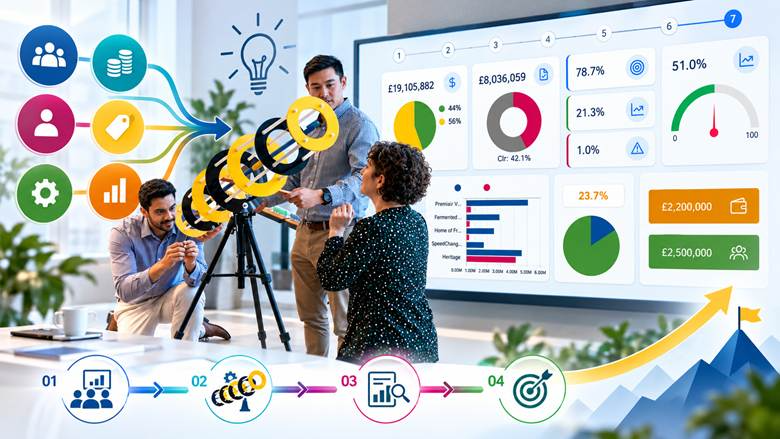
The starting point is the decisions leaders make.
Pricing, recruitment, customer service, capacity and investment all influence performance. The financial results give those decisions a measurable expression. Revenue, margin and cash reflect what people do, how they use resources and how effectively they work together.
Leaders need to recognise these connections. Winning more business may increase revenue while reducing profitability. An investment may improve capacity but place immediate pressure on cash. A cost reduction in one function may create additional work and expense elsewhere.
Understanding these relationships helps leaders assess the wider consequences of their choices. It also gives colleagues from different functions a stronger basis for discussing priorities and resolving competing demands.
How a business simulation develops that understanding
In a facilitated business simulation, participants take responsibility for running a business. They interpret information, agree priorities and commit resources. Their decisions produce results that they must then explain.
Why did revenue grow while margin declined? Where has the cash gone? Did the investment deliver the expected benefit? How did the team’s approach to planning and communication influence the outcome?
These questions connect commercial performance to the decisions and behaviour behind it.
The experience gives participants a shared reference point. They can examine choices they made themselves, challenge their assumptions, and test a different approach in the next round. The facilitator helps them connect that learning to their own organisation and responsibilities.
MDA’s physical business simulations combine this commercial challenge with direct interaction between colleagues. Participants must explain their reasoning, work through disagreement, and take collective responsibility for the result.
Read more: https://mdatraining.com/commercial-leadership-blind-spots-newly-promoted-leaders/
What could the session look like?
The format should reflect the purpose of the offsite and the time available. A focused half-day session can explore specific commercial connections. A full day allows more time to develop understanding through successive rounds of decisions and review.
The learning builds throughout the session.
Teams begin by assessing the business and agreeing an initial plan. They then make decisions, review the results and identify what they need to change. Each subsequent round gives them an opportunity to apply that learning.
Facilitated discussion after each round examines both commercial performance and the team’s approach. What did they overlook? Which assumptions held up? Where did functional priorities interfere with the wider business objective?
The final review brings the experience back to work. Participants identify the decisions they need to approach differently, the information they should use and the conversations they need to have with colleagues.
Making it relevant to your business
Relevance starts with the commercial questions your leaders need to answer.
For one organisation, the priority may be pricing and margin. For another, it may be capacity, working capital or investment. Familiar terminology and performance measures help participants make the connection, but the decisions within the simulation must also reflect the challenges they face.
That is why the design should begin with a clear discussion about the business and the intended learning outcomes. What do leaders need to understand? Where do decisions create unintended consequences? What should they be able to do differently afterwards?
A leadership offsite gives you the opportunity to develop that understanding across functions. A well-designed simulation gives leaders an experience they can remember, examine and draw on when they return to the business.
If commercial understanding is a priority for your next offsite, speak to MDA Training about a session shaped around your organisation. We can discuss your objectives and arrange an in-house taster to help you assess the approach.
