

















Developing commercially focussed store managers
An immersive programme for retail managers, placing them in the role of commercial leaders and challenging them to use store data to make informed decisions around sales, productivity, product availability, cost control, and customer performance.
Audience: Store managers and operational leaders in retail
The project
A leading national retailer recognised that many store managers were highly capable operational leaders but lacked a deep understanding of the commercial drivers behind store performance.
Managers were responsible for delivering sales, controlling costs, maintaining availability, leading large teams, and executing operational processes. However, performance varied across stores, and many managers struggled to connect day-to-day decisions with wider financial outcomes.
The retailer wanted a development programme that would help managers:
- Better understand the commercial levers that drive store performance.
- Improve decision-making using store management information.
- Increase accountability for profit, productivity, and customer outcomes.
- Build confidence in prioritising time and resources.
- Create a culture of continuous improvement.

The solution
In close partnership with our client, we designed and delivered an immersive development experience that combined practical workshops, operational best practice, leadership development, process improvement, and a Store Management Activity.
The programme was designed to challenge managers to think beyond operational execution and adopt the mindset of business leaders responsible for delivering sustainable commercial performance for their respective stores.
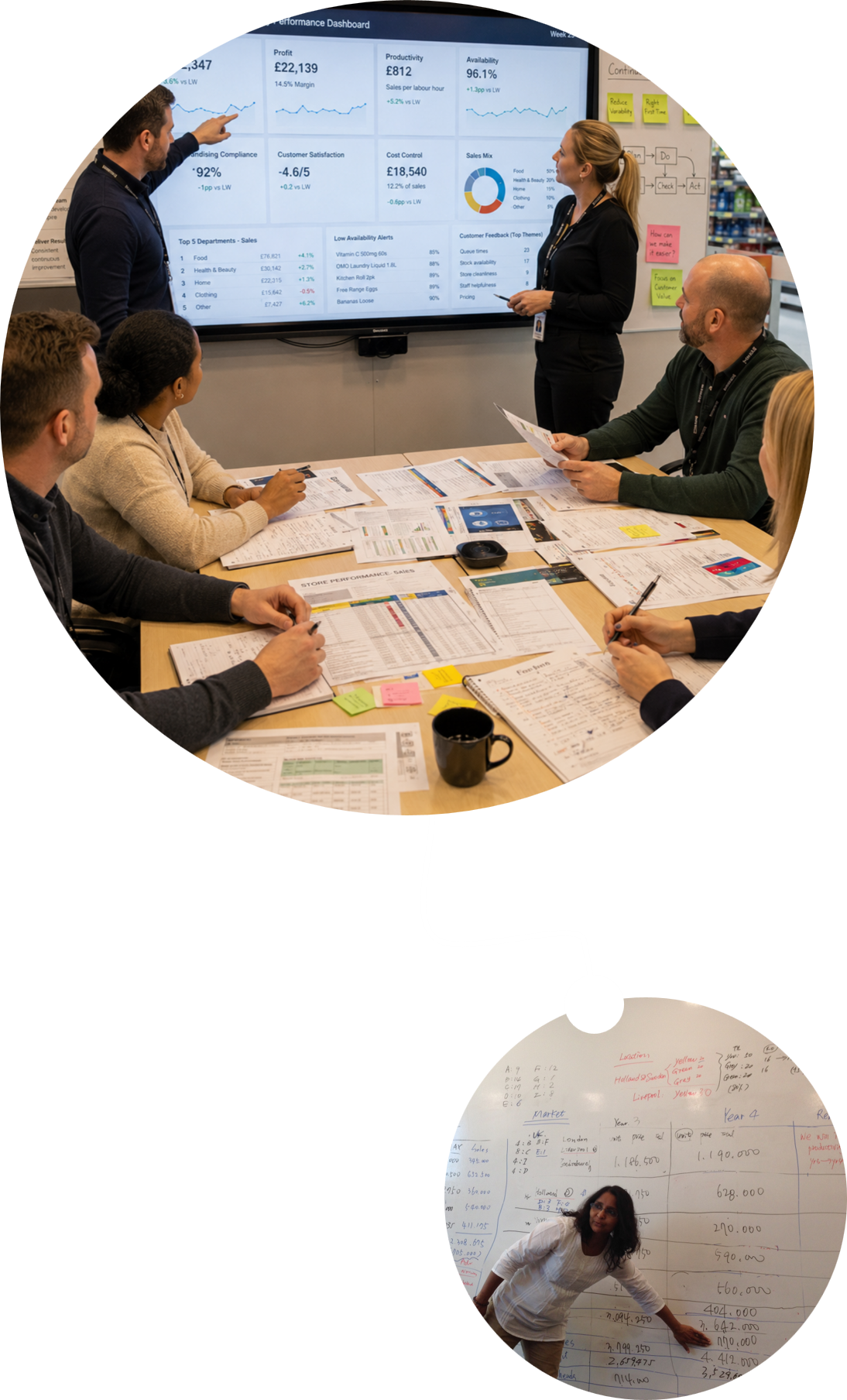
At the heart of the programme was a commercial simulation that brought together all aspects of store management. Managers were required to analyse store data, identify performance gaps, investigate operational issues, and develop action plans to improve results.
The programme began by helping managers clarify their role, priorities, and responsibilities. Through practical exercises and case studies, participants explored what distinguished high-performing store managers and how they should focus their time and energy.
Managers examined how space allocation, range decisions, merchandising standards, and replenishment routines influence sales performance and customer satisfaction. The programme reinforced the importance of delivering a shopping experience where customers could consistently find the products they wanted.
Drawing inspiration from an efficient Manufacturing System, participants explored lean thinking, waste reduction, process improvement, and operational excellence. Managers then applied these concepts in a practical simulation where they continuously refined processes to improve productivity and performance.
A dedicated commerciality module focused on store financial management. Managers learned how to interpret performance reports, understand key retail metrics, and identify the actions required to improve results across the business. Key concepts included profitability, productivity, stock management, cash routines, and performance convergence.
The highlight of the programme was a Store Management Activity.
Working in teams, managers received a comprehensive set of store information, performance reports, operational data, customer feedback, and colleague insights. Participants then investigated the store environment, interviewed stakeholders, and diagnosed the root causes of performance issues.
Teams were required to:
- Analyse store performance data.
- Prioritise the most important business issues.
- Balance customer, people, operational, and financial objectives.
- Identify actions to improve profitability and productivity.
- Develop and present a practical store action plan.
The simulation mirrored the complexity of running a real retail operation, forcing participants to make decisions with incomplete information while managing competing priorities.
The outcome
The programme helped store managers develop a stronger commercial mindset and greater confidence in leading store performance. By combining practical learning, continuous improvement principles, financial management, and an immersive Store Management Activity, the programme gave managers the tools, confidence, and commercial awareness required to drive sustainable retail performance.
Managers gained a clearer understanding of how operational decisions influence sales, profit, productivity, and customer outcomes.
Participants became more confident using management information and performance reports to identify priorities and take action.
The simulation reinforced the importance of continuous improvement, helping managers identify waste, simplify processes, and improve efficiency.
Managers developed a stronger sense of ownership for store performance and a better understanding of how they should spend their time to achieve maximum impact.
Every participant left with a personalised store action plan and a commitment to implementing specific improvements within their own business area.